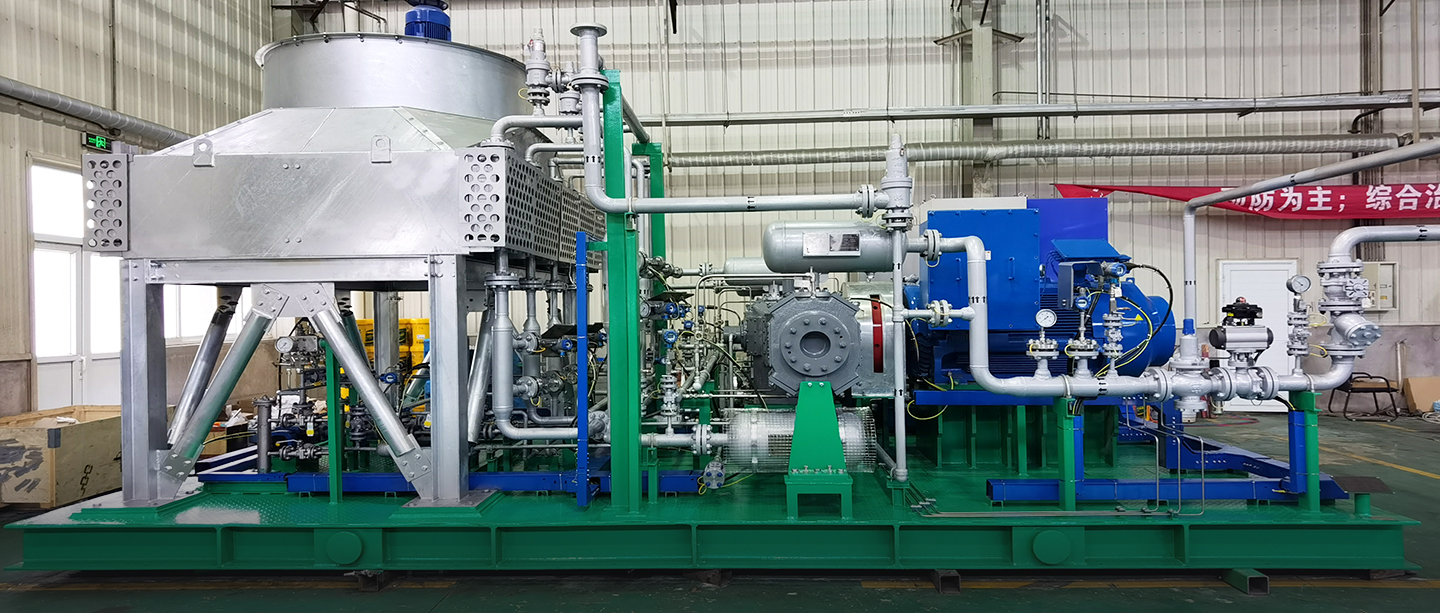
Reciprocating Compressor System
A reciprocating compressor is a positive displacement compressor that changes the gas volume by the reciprocating motion of a piston in a cylinder to achieve pressurization. It is widely used in high-pressure, low-flow scenarios.
Working principle:
Volume change: The crankshaft drives the connecting rod to drive the piston to reciprocate in the cylinder. The intake and exhaust valves control the intake and exhaust of gas, completing the four working processes of intake, compression, exhaust and expansion.Multi-stage compression: Multi-stage compression is used when high pressure is required, with coolers installed between stages to reduce exhaust temperature, and the pressure can exceed 100MPa.
Structural classification:
V-type, W-type, D-type
Transmission method:
Crankshaft drive (with or without crosshead)
Non-axis driven (such as free piston, electromagnetic drive)
Cylinder action: single-acting (single-sided compression), double-acting (double-sided compression), and differential type.
Lubrication method: Oil lubrication (traditional) or oil-free lubrication (using self-lubricating materials or diaphragm structure)High-pressure applications: oil and gas compression, chemical process gas pressurization (such as ammonia synthesis).Special requirements: Oil-free lubrication type for clean gas transportation in food, pharmaceutical and other industries.
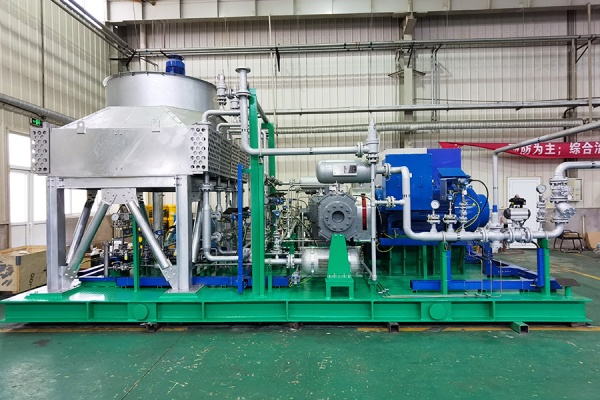
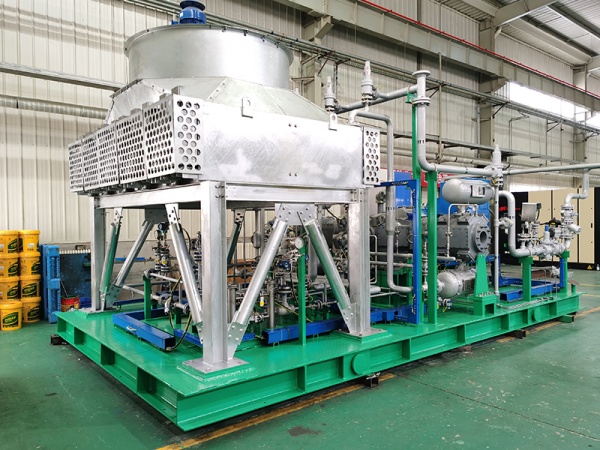

Contact Information
E-mail:kpt@vip.163.com
Sales Department:
International Markets:
Name: Zhang Ning
E-mail:zhangning@cnkpt.com
Telephone:+86 15122363326
WhatsApp:+86 15122363326
Skype :live:.cid.8ce260f7adff31dd
China Market:
Name: Guo Le
E-mail:guole@cnkpt.com
Telephone:+86 15122381880
After-sales service department:
Name: Liu Gang
E-mail:liugang@cnkpt.com
Telephone:+86 15022544922
Name: Han Jianping
E-mail:hanjianping@cnkpt.com
Telephone:+86 18526288340
International Engineering:
Name: Xue Xiulong
E-mail:xuexiulong@cnkpt.com
Telephone:+86 13672109867
Name: Yao Jingxuan
E-mail:yaojingxuan@cnkpt.com
Telephone:+86 13920277001
Share Us

Site Navigation
Copyright © 2025 All Rights Reserved
Tianjin Kepu Electromechanical Equipment Engineering Co., Ltd.
All rights Reserved|Technical Support:YunChuangChengda This Site Supports IPv6
Please choose online customer service to communicate


 中文
中文
 English
 SaudiArabia