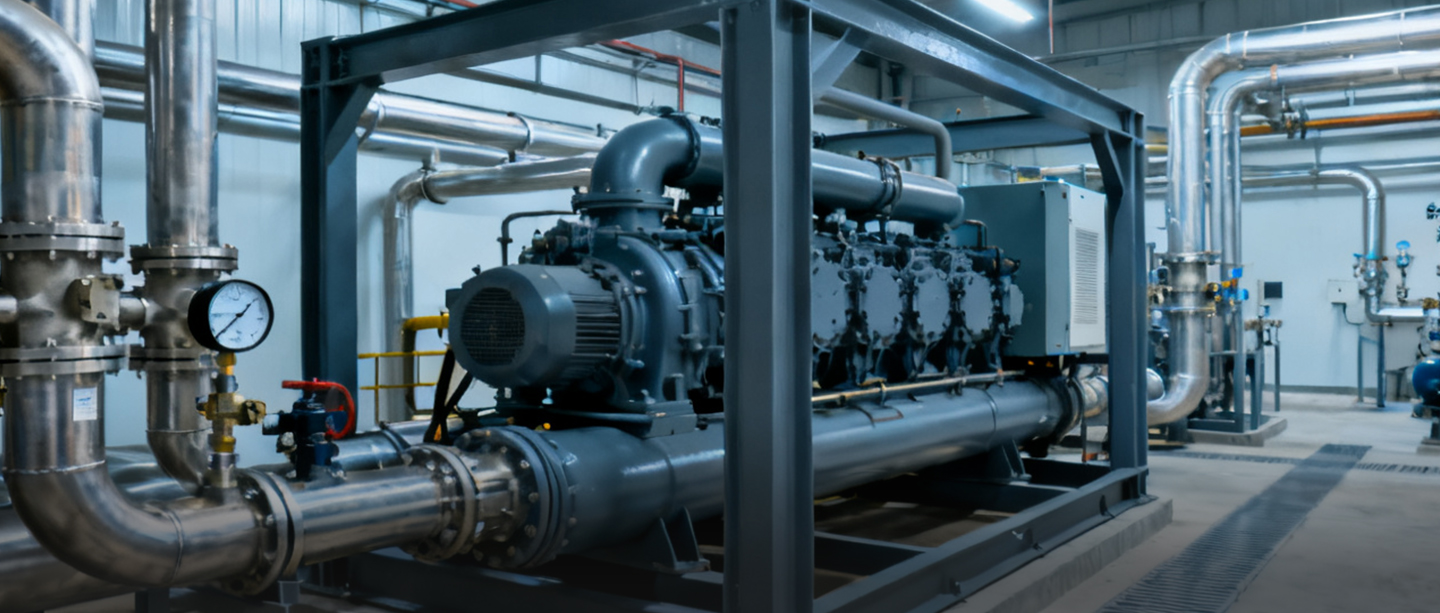
CNG System Module
CNG (Compressed Natural Gas) is a fuel made by pressurizing natural gas to about 20 MPa and storing it in gaseous form in special containers. Its main component is methane (CH₄), which usually accounts for more than 90%, with the remainder being small amounts of ethane, propane, and non-hydrocarbon gases (such as nitrogen and carbon dioxide).
Source: Mainly from gas fields, associated gas from oil fields, or coalbed methane, which is compressed and stored after purification treatment such as dehydration and desulfurization.
State: Gas at room temperature and high pressure, no cryogenic liquefaction required (unlike LNG).
Difference from natural gas
Natural gas generally refers to a mixture of hydrocarbon gases found in nature, while CNG is a compressed natural gas fuel specifically used for transportation or industrial applications.
1. Technical parameters and characteristics
Parameters: CNG vs. Comparison with fuels (LNG/gasoline)
Storage pressure: 20 MPa (approximately 200 atmospheres)
With a flash point of 650℃ (higher than gasoline's 427℃), it is less likely to ignite and therefore safer.
Emission characteristics: Sulfur-free, low CO₂, PM2.5 emissions reduced by 90%.
Advantages:
Environmental friendliness: It produces almost no sulfides or particulate matter after combustion, and its CO₂ emissions are 25% lower than those of gasoline.
Economic efficiency: The unit energy cost is approximately 60%-70% of that of gasoline (estimated based on 2025 prices).
2. Application Scenarios
Transportation
Buses/Taxi: CNG vehicles are widely used in major cities across China.
Short-haul logistics vehicles: Suitable for urban delivery, but rarely used for long-distance transportation due to limitations in the density of gas stations.
Industrial and civil use
Industrial fuel: Used for heating kilns in industries such as ceramics and glass, replacing liquefied petroleum gas (LPG).
Community gas supply: As a supplement to piped natural gas, it provides energy to remote areas.
CNG, as a clean and economical fuel, has significant advantages in public transportation and industrial sectors, but its energy density and refueling infrastructure limit its long-distance applications. In the future, with technological upgrades (such as composite material cylinders) and policy support (such as carbon emission reduction subsidies), the CNG market is expected to expand further.
Contact Information
E-mail:kpt@vip.163.com
Sales Department:
International Markets:
Name: Zhang Ning
E-mail:zhangning@cnkpt.com
Telephone:+86 15122363326
WhatsApp:+86 15122363326
Skype :live:.cid.8ce260f7adff31dd
China Market:
Name: Guo Le
E-mail:guole@cnkpt.com
Telephone:+86 15122381880
After-sales service department:
Name: Liu Gang
E-mail:liugang@cnkpt.com
Telephone:+86 15022544922
Name: Han Jianping
E-mail:hanjianping@cnkpt.com
Telephone:+86 18526288340
International Engineering:
Name: Xue Xiulong
E-mail:xuexiulong@cnkpt.com
Telephone:+86 13672109867
Name: Yao Jingxuan
E-mail:yaojingxuan@cnkpt.com
Telephone:+86 13920277001
Share Us

Site Navigation
Copyright © 2025 All Rights Reserved
Tianjin Kepu Electromechanical Equipment Engineering Co., Ltd.
All rights Reserved|Technical Support:YunChuangChengda This Site Supports IPv6
Please choose online customer service to communicate


 中文
中文
 English
 SaudiArabia